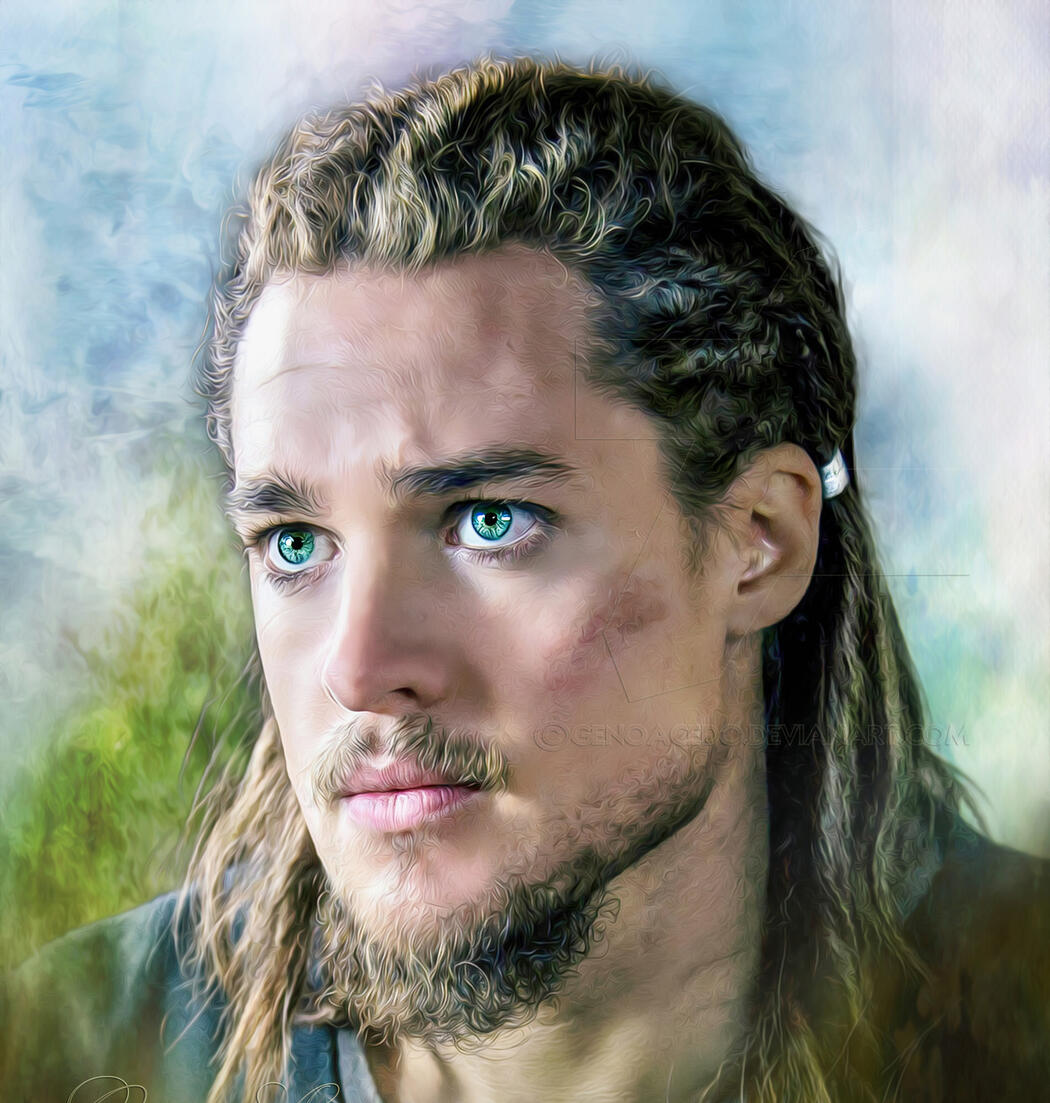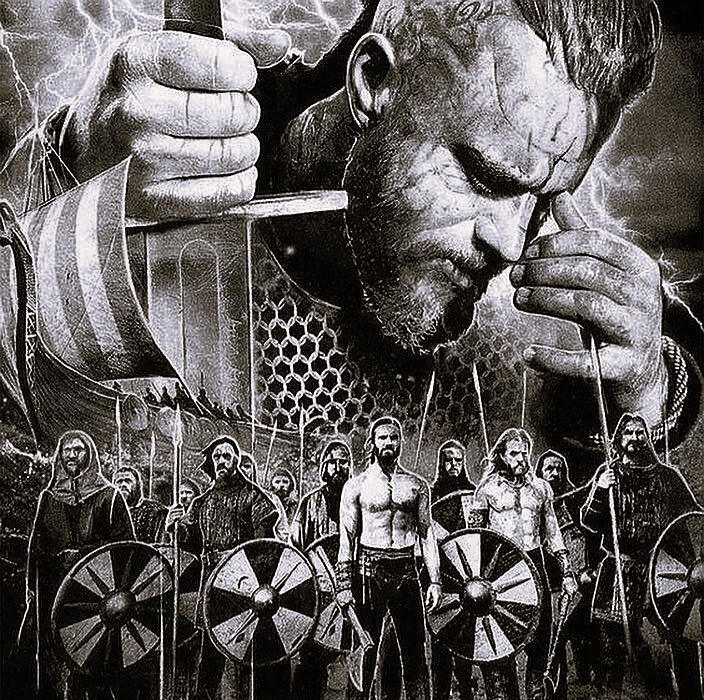
Víðarr Hróðvitnir
Champion of the Great Hunt
Birth Name: Víðarr HróðvitnirSlave Name: Panulus QuantuliusGladiator Name: GannicusAge (Book I: The Conquering Wolf): 92 - 98 (Day of Death: 98 Years of Age)Age (Book II: The Huntmaster's Boon): 98 - 120 (Day of Death: 120 Years of Age)Birth sign: The WarriorEthnicity: Nordic GiantAffliction: Lycanthrope (Boon of Hircine)Culture: Nordic GiantHomeland: SkyrimOccupation: Gladiator, MercenaryReligion: MonothesticPatron Deity: Hircine
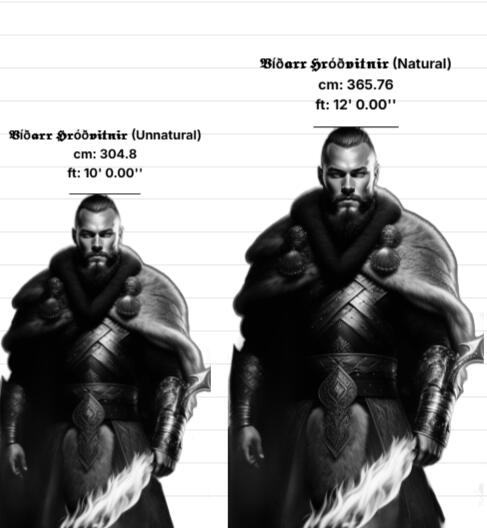
Height:
12ft (Natural: Human)
15ft (Natural: Lycanthrope)7ft-10ft (Enchantment: Human)
13ft (Enchantment: Lycanthrope)Weight:
1,440lbs (Human)
5 Tons (Lycanthrope)Body Type: Mesomorphic MuscularEye Color:
Grey (Human)
Red (Lycanthrope)Skin Color: Warm IvoryHair Color:
Dark Golden Brown (Human)
Ivory White (Lycanthrope)

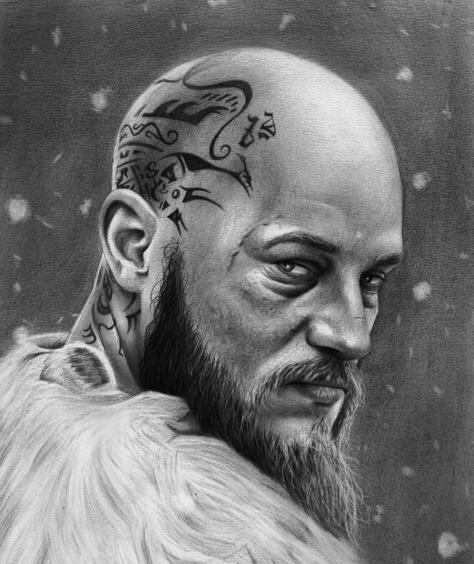
Vǫluspá
Several generations prior to this day, poems were written by those who claimed to be gifted by birthright. A story told of a child born of honorable glory. To raise the banners of their family's name and to forever mark their history within Nirn as a legacy worthy of the bloodline they inherit. The origins of such a tale is unknown and plausibly considered to be rumors amongst the people the giants. This prophecy as it were called was named Vǫluspá, "Prophecy of the Seers". These strange and peculiar people, not truly known to the world; were the Völva.
Jötunheimr
A land within lands, found in the reaches of Skyrim. Jötunheimr is no nomenclature to Tamrielic folk. It is a reference spoken by the tribalistic natives that thrive alongside the exiled ancestors of the Nordic people. Jötunheimr refers to the icy lands of Skyrim's vast regions where the Jötnar are predominantly found inhabiting the wilderness. Jötnar is a word derived from the jargon language created by the Nordic families that remained in exile with the ancestors of the Nordic folk; Giants. This word means, 'The Giant People' and it was with the Jötnar that these families cultivated children and villages outside the world's norm. Eventually these families would breed into the Jötnar and bastard half-breeds of Jötunn descent would be sired for generations. It was these Nordic people who would eventually become like the Jötnar who encouraged a language to articulate amongst their people. They spoke a tongue they referred to as Norse.
Legacy of the Hróðvitnir
Through seventy-eight generations passing, the family Hróðvitnir remained united with the Jötnar. It was all these years of coexistence that truly allowed these descendents to live in peace with their ancestral counterparts. Though after many years of inter-breeding with the Jötnar, the half-breed lineage gradually inherited more qualities of their distant relatives. It was during the emergence of the seventy-eight generation that Víðarr Hróðvitnir would be born. His father a member of the Hróðvitnir family and his mother a wholesome Jötunn.The Hróðvitnir family wasn't merely separate from the world in their practice of breeding with giants but it was also the inheritance of their bloodline that allowed them manage in survival for several generations. Easily, the Nordic family could have fallen extinct to a variety of reasons but their key differences from the world salvaged them through resolve alone. Having the capacity to stand near equally with the Jötnar. The oldest member of the family, the first ancestor to be record in the records of the Hróðvitnir was Rɑɣnˌɑr (Ragnarr Hróðvitnir).Rɑɣnˌɑr carried a special gift or an affliction as some might describe. He was an inheritor of Lycanthropy and his descendants for every generation after would carry that birthright.Rɑɣnˌɑr the half-breed and Brünhild of the Jötnar conceived Víðarr in a marital union. It was this child born of these two lovers that would become the child of prophecy amongst the living Hróðvitnir people. His inheritance of Lycanthropy and a peculiar difference in his past relatives, marked him to be revered as a blessing in eyes of his kin.Víðarr was born with an extremely rare condition known as Gigantism. (Acromegaly - is a rare condition where the body produces too much growth hormone, causing body tissues and bones to grow more quickly.) When brought before the Seers, he was marked as a boy of blessing. He had been an unnaturally large baby for a half-breed and it was seen as a gift of all their generations passed down onto him. Víðarr was their closest pure-bred child and the only half-breed of the family destined to reach the heights of their Jötnar relatives.Some feared he may have encountered a disease and would grow unproportionate. Yet the Seers believed it was his Lycanthropic descent that sustained his body through development and allowed him to develop healthily. (As an baby, Víðarr weighed 48lbs and 17 ounces.)
Tales of the "Conquering Wolf"
Hróðvitnir, the family's name means "The wolf that soars to the moon". Víðarr's first name was given to him by his mother who believed her child would grow to become a conqueror and ruler of her people. Brünhild became infatuated by the idea that her son may truly be blessed as the seers foretold and thus she named him Víðarr "Conquering God".In completion, Víðarr Hróðvitnir translates from jargon "The Conquering God Wolf that soars to the moon."Whilst Víðarr's mother was proud of her child's conception. Rɑɣnˌɑr was not as enthusiastic as his wife and on several occasions attempted to kill the child when isolated from the mother. It was shortly after that Rɑɣnˌɑr and Brünhild confronted one another about their disagreements on Víðarr's continued life. Rɑɣnˌɑr believed his child was blessed but also thought that his son was a danger to the natural order. Víðarr was fortunate to be one of the few existing people who would ever reach such dangerous capacities as a full-blooded Jötunn. His son would not only be a Jötunn but a Lycanthrope of excessive size which could threaten the very nature of predatory laws in wilderness. Víðarr could pose a threat to not only their own survival but others as he was destined to become an alpha predator.Brünhild believed this was all the more reason to praise their child's birth. Their dispute led into violence and Brünhild would flee while being wounded after having barely saved Víðarr from Rɑɣnˌɑr. Rɑɣnˌɑr would never find his escaped wife but Brünhild would die while cradling her baby in her arms.Víðarr would be found a day later, still alive miraculously. Traveling merchants who sold exquisite human merchandise. They acquired the infant half-breed and immediately sold him in the markets of an Imperial city. Víðarr would be taken under the house of a prominent own of slaves and gladiators known by the name Gaius Julius Caesar Octavianus. A nobleman on the rise to authority and power after rising from the impoverished streets of his home city.Gaius named Víðarr, Panulus Quantulius. Raising the half-breed as a service slave in the quarters of his house's threshold. At the age of seven, Gaius was informed by one of his advising trainers for his gladiator merchandise that young Panulus had the potential and physical form to be a gladiator. Gaius ordered his advisor, Oenomaus to take Panulus under his tutelage and train him properly enough to bring in the coins worth owed from buying the expensive child.Oenomaus did not know why but recognized Panulus's sudden growth to towering over young boys like himself and standing beside adolescent men. He trained Panulus for months to come in how to embrace the psychology and physical discipline of a gladiator. In technique and form, Panulus adapted the craft with inherent ease as if it was given to him by birthright.A month after, Gaius enlisted Panulus into his first contest in the arena where the young boy earned his master ample coin as his victories came immediately with his entrance. After his first grand triumph in the arena, the victorious Panulus was renamed; Gannicus the Minotaur. Gaius believed this name would inspire the crowd and bring in greater funding than his house had ever seen.For a short time Gannicus's reign in the arena was nothing but lucrative and Gaius praised of his wealth and the boy's talents. However an overlooked matter that was not known to the nobleman was Gannicus's affliction with Lycanthropy. After killing his first victim, the beast within the young man awakened. During the first full moon after Gannicus's many triumphant bouts in the arena, the young man would transform inside of Gaius's ludus. If not for the sacrifice of half the stock of slave warriors Gaius acquired, the man's noble house would have been ravaged. His gladiators restrained the newborn Lycanthrope and Gaius upsettingly caged the monster until morning.Overnight he bargained with a daedric entity whom he knew collected monsterous merchandise to fuel the same business as Gaius himself. This daedra collected monsters and pit them in the arena against greater monsters, building a profit from the sponsors of Oblivion or adventuring mortals. Gaius arranged a deal that for the half-breed Lycanthrope that he would be aided in rising into power in his native city.The request was ultimately accepted and the deal was made. Gannicus before the full light of sunrise was given to a daedra by the name of Typhoeus or Typhon ruled over an daedric house known as Tartarus.There Gannicus's training would continue and his alignment to Hircine was confirmed by Typhoeus. The daedra understood the importance of reverence in one's origin of deity. Knowing that Gannicus's talent would surpass itself if the beast within was nurtured and thus had his many barons educate Gannicus on the teachings of Hircine's worship. Allowing the gladiator to practice his faith and become a warrior in his own right.For three decades, Gannicus remained a slave to Typhoeus and earned the title of "Champion". Visiting arenas across the world or realm to participate in the games of daedric influence. His victories would earn him the respect of appraisal from his opponents and other great houses. Even having been allowed to participate in Hircine's seasonal Great Hunt, Gannicus would prove to be an exceptional hunter and fighter. Earning his boon of his deity in his early years.Gannicus was without Typhoeus greatest investment that proved to be beneficial. However after three decades of consistent victories, the master released his slave for earning his freedom. In spite of this, Gannicus returned of his own free will to still participate in the games for Typhoeus. Whilst now having the freedom to explore more on his own volition, Gannicus maintains a ritualist lifestyle between the arena and his devotion to Hircine.At the age of thirty-four, Gannicus recognized the responsibilities that came with earning his boon from Hircine. Fulfilling his calling to his Daedric Prince and siring lycanthropes to join Hircine's hunt. It was in this agenda that Gannicus unwittingly created a settlement of people who looked to him for leadership.These people continued to expand and became a minor power that would bring siege across the lands to small villages, idle homes, or unprotected havens. If it was not a Kingdom, it became a target for their raids as they attempted to grow in power.This vendetta that Gannicus had not originally desired, eventually returned him home to Jötunheimr where he unknowingly came across his former people and merged his own covenant of wolves with his long lost families.In his return to his people, he'd eventually be forced by the nature of political power amongst the two separate authorities in Jötunheimr by his relatives who ruled and himself who was given reigning leadership over his lycanthropes. Asserting his need to protect his lycanthrope counterparts that he sired, Gannicus was forced to slay one of his relatives and take on the responsibility of a people and his own sired reluctantly.He'd continue to sire my lycanthropes and raid the land. Eventually after many years of expanding his people into a haven for his relatives and lycanthrope cousins or close related strains of affliction, he'd marry with a Jötunn named Lagertha and a half-breed Jötunn named Athelstan.Lagertha would give birth to seven of Gannicus's sons. Each were named, Björn Ironside, Vidar The Reaper, Hvitserk Mountainside, Sigurd Shadow Wolf, Ivarr The Boneless, Halfdan Braveheart, Thorbjørn Thunderbird. After giving birth to his children, Lagertha later died in battle protecting their settlement from raiders that sought to retaliate against their people's attack on the main lands. While Lagertha managed to save the settlement, she fell in battleAthelstan and Gannicus lived happily for many years, raising the seven boys. However eventually Athelstan would be accused of heresy against Hircine and was murdered by one of Gannicus's close allies Flokisan.As many times before, Gannicus was forced to kill a friend for their betrayal. Flokisan was killed in honorable combat with Gannicus. After a time of the constant raids, wars, and the pillaging, the death that surrounded Gannicus his entire life; he began to suffer from traumatic stress.The breaking point for Gannicus was the encounter with his mother during one of Hircine's seasonal Hunting Games. He'd encounter Brünhild in the Hunting Grounds where he was forced to hunt and kill his mother for sport. She did not die willingly and the battle was fiercely fought. In the end she fell to her son and before dying to be reincarnated in the hunt, she told him of the name he was born with; Víðarr Hróðvitnir.She claimed to know Víðarr even after all these years because he resembled his father. Confessing that in her last moments of life, she offered her soul to Hircine if he'd hear her prayer to save the life of her child. Víðarr's miraculous survival in the cold for a day was perhaps the workings of her bargain for her son or simple fortune. Nonetheless, she was now within Hircine's games.In her last regards Brünhild told Víðarr where his father could be found. Not confessing how she knew but after expressing the story of his birth and betrayal, she encouraged Víðarr to find Rɑɣnˌɑr.Named champion once more, Víðarr ventured across Jötunheimr in a hunt for his father. In their encounter, his father Rɑɣnˌɑr was not ashamed and opted to redeem his failure and kill Víðarr now. Though Rɑɣnˌɑr would be easily bested as he was never a greater warrior than Brünhild and his victory over her was due to her sacrifice to save Víðarr. Without remorse but a final words with his father, Víðarr killed Rɑɣnˌɑr.He returned home shortly after to continue raising his sons. When they were of age, he'd allow his oldest to inherit the throne to their people while himself retired to the wilderness to find peace from the chaos of ruling and murder of the world. He'd continue to find solace in the arena and Hircine's games but no longer had the heart to rule over others, enduring the betrayal of loved ones and killing those he cared for.From that day forth, Víðarr of ninety-two years of age was a wonder, hunter, and a gladiator. A champion respected by his people and idolized by his sons. He was truly the prophesized child of his family's name for he did what none other of them could. He united his families, he honored Hircine wholesomely, and gave them more opportunities to triumph in exile of the world. They knew him as a king, conqueror, friend, and brethren. Maybe not much in the greatest schemes of the world but for a nobody, Víðarr became someone to admire and remember. . .
Portrait: Víðarr Hróðvitnir
(The Conquering Wolf)
Death: Víðarr knew many enemies in the years that pillaged and waged war for the sake of his people. Amongst these enemies, many proclaimed Kings desired the bane of their lands to fall in battle or suffer execution. After Víðarr's long retirement from the throne, his sons inherited the legacy of honor, courage, and the reigns of the people that Víðarr would leave behind to seek the simple life of a farmer, albeit still in practice of his culture and traditions. Later, Víðarr learns of a looming threat that could jeopardize the future of his children and the people he served tirelessly. In an honorable effort to bring an end to the legacy of violence caused by the needs of opposing Kingdoms, Víðarr sacrifices himself to one of his most announced enemies. The rivaling King accepted Víðarr's sacrifice for bond of peace between people. In imprisonment Víðarr experienced brutality, beaten ruthlessly by the King's people. His final days were to wait in the idleness of his prison cage for the time of his execution. In the last hour, he said his final words. . .
“How the little piglets would grunt if they knew how the old boar suffers."“It gladdens me to know that Aldafaðir prepares for a feast. Soon I shall be drinking ale from curved horns. This hero that comes into Valhöll does not lament his death. I shall not enter Aldafaðir's halls with fear. There I shall wait for my sons to join me and when they do, I will bask in their tales of triumph. The Æsir will welcome me. My death comes without apology and I welcome the Valkyrja to summon me home!"Shortly after this last words of Víðarr, the hero of his people was released into a pit of snakes where he'd lay injured in torment until death truly claimed him. It was during his final moments that Vidarr had realized the truth regarding his deceased husband, Athelstan. Athelstan's death was due to accused heresy of faith and doctrine. Vidarr's investigation led him to question many of Athelstan's faculties and the conversations discussed. Out of love, Vidarr dismissed Athelstan's apparent transformation into another religious denomination. Nonetheless in these final moments, all seemed to make sense and Athelstan's various stories would bear fruit in Vidarr's soul. Vidarr would reach Sovngarde only to later in his time there exchange his beliefs for the same as Athelstan, in a mysterious Lord & Savior. . .
Regardless of his past, Vidarr once reunited with his wife, Lagertha in Sovngarde, but would reunite with Athelstan as brothers in the next life. The true mystery isn't so much the Lord, Athelstan worshipped but this holy of holiest places that Vidarr had chosen over his life's work; Sovngarde.Song of Víðarr Hróðvitnir -Eigi hugðak orma
at aldrlagi mínu;
verðr mjök mörgu sinni,
pats minnst varir sjálfan.Eigi hugðak orma
at aldrlagi mínu;
verðr mjök mörgu sinni,
pats minnst varir sjálfan.Nú munk nár af bragði
ok nær dyrum deyja.Gnyðja mundu grísir,
ef galtar hag vissi,
mér er gnótt at grandi,
grafa inn rönum sínum,
ok harðliga hváta,
hafa mik sogit, ormar;
nú munk nár af bragði,
ok nær dyrum deyja.(TAMERIELIC TRANSLATION)"I did not look to a snake to be my bane;
things happen very often to one that one thinks of the least.
Soon now will my body die among the beasts.
The young pigs would squeal if they knew the state of the boar; of the injury done to me.
Snakes dig in my flesh, stab at me harshly, and have sucked on me;
soon now will my body die among the beasts."Milestones of Víðarr Hróðvitnir- Born into slavery: Víðarr was stolen as a infant and sold into slavery. . .- Champion of the Arena: In slavery Víðarr Hróðvitnir was given the names Panulus and Gannicus; which would serve him as a slave and successful gladiator of the arena.- Hircine's Champion and Lord: Víðarr's success in the arenas across the realms granted him an opportunity in Hircine's tribunal hunt. There Víðarr Hróðvitnir accomplished the unthinnkable and won the rite of Lord and Champion to the Daedric Prince.- Valiant Hero and Savior: Víðarr Hróðvitnir returns to his native homeland to save his people from warfare and slaughter, earning him a revered station as hero and king. He sires many sons and an unknown daughter.- The Great Redemption: Víðarr Hróðvitnir retires from Hircine's sovereignty and seeks out a new path for his life, abandoning the religion of Lycanthropy in search of purpose for Athelstan's conviction to die. Sovngarde becomes his first answer but questions arise if whether Athelstan truly sought Sovngarde. For now, Víðarr Hróðvitnir hopes to reunite with his lost friend in the afterlife.- The Ascension: Víðarr Hróðvitnir follows a journey of redemption and cleansing eventually, he discovers a path to cure him of his Lycanthropy so that he might follow his beloved friend to heavenly places and with being cured he realized that as he matured in Lycanthropy that his gigantism was cleansed by the disease; though he remained a giant, his natural life would not be threatened by the disorder. However in doing so, Víðarr Hróðvitnir disappointed his former Daedric Prince and the wrath of the Lycans would follow him for many years to come until one day a cunning Lycan orchestrated the death of Víðarr Hróðvitnir through one of his many former rivaling kings. This unknown Lycanthropic enemy who was loyal to Hircine, quietly manipulated the favor of Víðarr Hróðvitnir's execution despite the Nord's renewed heroism and retirement from Hircine.- The Rapture: In death, Víðarr Hróðvitnir realized he lived a life worthy of Sovngarde. Accepted into the holiest of places for the Nordic people; Víðarr Hróðvitnir temporarily enjoyed his lavish return to the life of an honorable man however while he reunited with his wife, his close friend Athelstan could not be found but a belonging of the man was in Sovngarde; a bible. Reading these strange texts, Víðarr Hróðvitnir too vanished from Sovngarde and the mystery of Athelstan and Víðarr Hróðvitnir perplexes most. . .- The Vow: It was his birthright that eternally bound him to Hircine, as a champion and as a zealot to the Daedric Prince. It was also his vow to Kyne that offered a potentiality in which his Lycanthropic flame may be snuffed out and be replaced by the embers of devotion to the Divine pantheon. However, Víðarr Hróðvitnir would soon learn that bonds made between mortal and gods are not easily broken. His entire life was served in devotion to the great huntmaster, Hircine. He never expected to denounce his conviction for the huntmaster or those devoted to the Daedric Prince. In his death, Kyne's hands would wrest him from perpetual slumber and guide him to Sovngarde where his hopes waited patiently for him; a reunion with Athelstan. After his discovery involving Athelstan's obscure whereabouts, he too like his beloved would disappear from Sovngarde's great halls. Though how would be a mystery, to most. . . Days after death, Víðarr Hróðvitnir was stirred from his slumber by the cool pitter patter of rain. He thought his vision betrayed him for he no longer slept in the confines of opulent paradise for a warrior as himself. He thought his mind had deceived him aswell, for he too had a strange dream. An encounter with the Huntmaster; Hircine. To his recollection, the Huntmaster revoked any attempt to cleanse his inherited Lycanthropy and before Kyne's will was complete and the undertaking of Víðarr Hróðvitnir's spirit was without intervention; Hircine's boon restored Víðarr Hróðvitnir from death. This made Víðarr Hróðvitnir question whether Sovngarde was truly something he had once graced as a legend and hero. It seemed real enough, Kyne's presence was unquestionable. Much time passed in Sovngarde but it felt only moments after his expected demise. Víðarr Hróðvitnir was not certain to the nature of this experience or what all remained true of it. His heart spoke clear to him despite this. Hircine had no intention of releasing his champion. It would seem, Víðarr Hróðvitnir remained a Lycanthrope and his fate was still in the making. . .
Portrait: Athelstan
(The Priest)
Deceased Husband
Death: A faithful priest of Hircine, murdered by one of Víðarr's closest friends. He was accused of heresy and unjustly killed when the prior ruling overturned any accusations.
Portrait: Lagertha
(The Shieldmaiden)
Deceased Wife
Death: A valiant fight to defend the home of her people, she dies in a betrayal for the throne. Her youngest son Ivarr kills her on the battlefield.
Portrait: Varro
(First Love - Gladiator)
Deceased
Death: After a stunning show and defeat in a friendly spar with Gannicus, Gaius Caesar Augustus ordered the execution to appease the guests attending his house's congressional. Gannicus was forced by obligation to kill his first love and friend.
Portrait: Agron(Second Love - Gladiator)DeceasedDeath: Staged in a bout within the sands of the arena by orders of Gaius Caesar Augustus; Agron and Gannicus were forced into battle against one another. Even after a cunning plan to overthrow the possible execution by showing a sign of mercy from the loser, the death of Agron seemed inevitable. Defeated by Gannicus, Agron appeals for mercy but Gaius orders his execution before the crowd. Gannicus is forced to deliver the would be fatal blow. To the surprise of Gaius and the spectators, Agron survived his injuries and was later crucified by Gannicus by Gaius's command. Agron died three nights after crucifixion, Gannicus never left his side until the last breath was taken.
**Portrait: Legacy of Víðarr **
UL: Hvitserk Mountainside (4th Born)
ML: Björn Ironside (1st Born)
BL: Ivarr The Boneless (7th Born)
M: Víðarr The Conquering Wolf (Father)
UR: Vidar the Reaper (2nd Born)
MR: Sigurd Shadow Wolf (3rd Born)
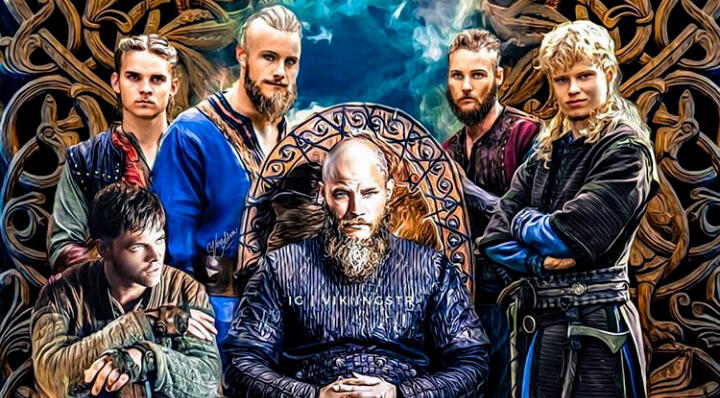
Halfdan Braveheart
(5th Born)